Skip to content

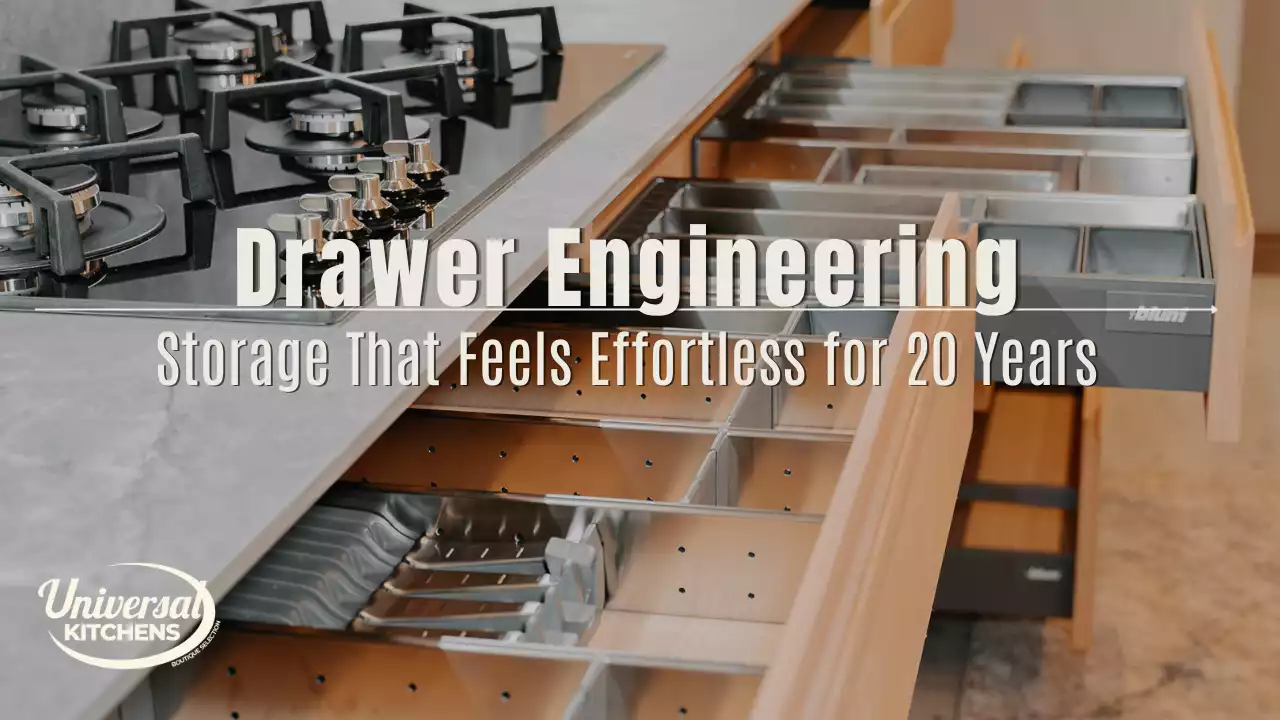
The hidden hardware choices that stop heavy drawers from sagging, rattling, or frustrating daily kitchen life.
A luxury kitchen should not only impress on installation day. It should continue to feel composed, quiet and effortless many years later, when the pot drawer is full, the pantry is well stocked, and the cutlery drawer has been opened thousands of times.
This is where drawer engineering becomes one of the most important hidden decisions in a premium kitchen. The finish may be what catches the eye, but the movement is what shapes the daily experience. A drawer that glides smoothly under weight, closes softly, extends fully, and keeps every item in place creates a sense of ease that homeowners feel every single day.
In high-end South African kitchens, especially in homes designed for entertaining, family living and long-term renovation value, storage must be more than spacious. It must be engineered. Drawer depth, kitchen drawer runners, internal organisation and drawer load ratings all work together to determine whether storage remains aligned, silent and intuitive over time.
Why luxury storage begins beneath the surface
Imagine a wide drawer filled with cast-iron cookware, serving dishes and heavy casserole pots. On paper, it may look like excellent storage. In daily use, however, that same drawer can become frustrating if it drags, dips, rattles or hides items at the back.
This is why Universal Kitchens approaches high-end kitchen storage as part of the full design experience, not as an afterthought. A beautifully planned kitchen needs drawer systems that suit how the homeowner actually lives. A family home in Gauteng may require generous pantry drawers for regular entertaining. A Garden Route home may need durable mechanisms that perform reliably in humid coastal air. A Cape Winelands residence may call for refined storage that supports both everyday cooking and elegant hosting.
Luxury is often most noticeable when nothing interrupts the rhythm of the kitchen. The drawer opens cleanly. The runners remain quiet. The back of the drawer is visible. The contents stay organised. The movement feels considered.
That level of performance is not accidental. It is specified.
Load ratings: why strength changes daily use
One of the most practical yet overlooked specifications in luxury kitchen design is the drawer load rating. This number indicates the weight a drawer runner is designed to carry while still operating correctly.
In premium runner specifications, 40 kg and 70 kg load classes are commonly used for wide and heavily loaded pull-outs. These capacities are particularly relevant for pot drawers, pantry drawers, appliance drawers and large “everything drawers” often found in high-end kitchens.
This matters because a drawer rarely stays showroom-empty. Over time, homeowners naturally fill storage with cookware, bakeware, tableware, dry goods, oils, spices, utensils, cleaning systems and entertaining pieces. A drawer that is not correctly specified for its purpose may begin to feel loose, noisy or misaligned.
A pot drawer storage zone, for example, requires more than depth. It needs the correct runner class, careful cabinet construction and a drawer box designed to remain stable under repeated load. When all three are aligned, the result is a drawer that continues to glide with confidence, even when filled with heavy cookware.
For Universal Kitchens clients, this is where investment quality becomes tangible. The value is not only in premium materials or elegant finishes, but in the way each component continues to perform after years of daily movement.
Runner choice determines the feel of luxury
The quality of kitchen drawer runners has a direct effect on how a kitchen feels. A well-engineered runner makes the drawer movement almost disappear into the background. A poorly matched runner draws attention to itself through resistance, noise or uneven motion.
Premium runner systems typically include options such as concealed runners, full extension, integrated soft-close, push-to-open functionality and different load classes. These details may sound technical, but they shape the experience of the kitchen more than many homeowners realise.
This is why soft-close drawers should be judged under real conditions, not only when empty. The true test is how the drawer behaves when it is full of plates, cookware or pantry goods. A premium drawer should close softly without slamming, glide smoothly without wobbling, and feel controlled throughout the movement.
Concealed drawer runners also contribute to a refined aesthetic. Because the mechanism is hidden beneath the drawer, the interior appears cleaner and more architectural. This is particularly important in luxury kitchens where every visual line matters, from slim drawer profiles to carefully planned internal layouts.
For handleless kitchens, runner specification becomes even more important. Push-to-open and soft-close technologies must feel intuitive, not temperamental. When specified correctly, they support a calm, minimal design language while keeping daily use effortless.
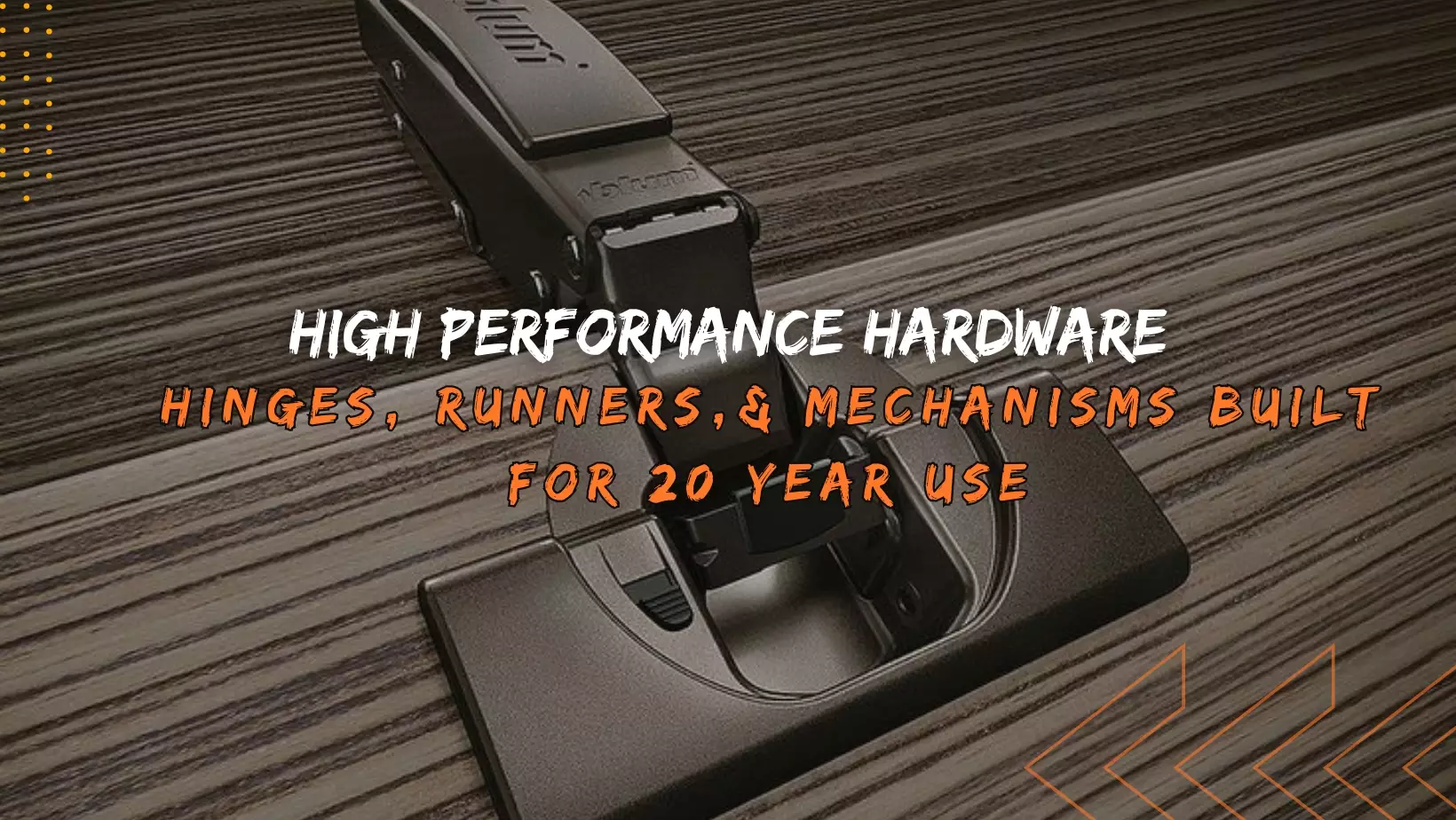
The importance of 20-year performance
A premium kitchen is not designed for short-term appeal. It is a long-term investment in the home, the lifestyle of its owners and the pleasure of daily living. That is why hardware endurance is a meaningful specification.
Selected premium concealed runner systems are designed for extensive opening and closing cycles, often tested to performance levels that represent many years of daily use. Over 20 years, a busy kitchen drawer may be opened tens of thousands of times. The cutlery drawer, spice drawer, waste pull-out and crockery drawers may all experience heavy daily use.
This turns a technical specification into a practical lifestyle point. A drawer is not simply opened once or twice a day. It is used during breakfast, cooking, cleaning, entertaining and late-night routines. Over time, those repeated movements reveal the difference between ordinary storage and properly engineered storage.
This is why Universal Kitchens places such importance on the hidden hardware specification. The homeowner may not see the runner once the drawer is installed, but they will feel its quality every morning, every dinner service and every time the kitchen is used by family or guests.
A 20-year kitchen requires more than strong cabinetry. It requires movement systems that are engineered for repetition.
Drawer depth planning: how deep should kitchen drawers be?
One of the most valuable questions in kitchen planning is: how deep should kitchen drawers be?
The answer depends on what the drawer is intended to store. A shallow drawer may be ideal for cutlery, utensils, spices or knives. A medium-depth drawer may suit crockery, linen, food containers or serving pieces. A deep drawer may be required for pots, pans, pantry stock, appliances or integrated waste systems.
The key is not simply to make every drawer as deep as possible. Effective drawer depth planning matches drawer height, depth, runner capacity and internal organisation to the intended contents.
Premium full-extension runners are available in a range of nominal lengths, allowing designers to plan drawers with varying depths and purposes. However, depth must always be considered alongside the runner system, cabinet structure and expected load. A deep drawer filled with light linen has different requirements from a deep drawer filled with cast-iron cookware, pantry jars or stacked plates.
In a luxury kitchen, deeper drawers can transform lower cabinetry. Instead of crouching to reach into the back of a cupboard, homeowners can pull the contents towards them. Large cookware, pantry items and entertaining ware become easier to see, lift and return.
This is particularly useful in South African homes where kitchens are often central to hospitality. Large serving platters, braai accessories, bulk pantry items and family cookware need storage that is accessible rather than hidden away.
Full-extension runners and the end of dead space
Traditional cupboards often create dead space. Items migrate to the back, where they become difficult to see and awkward to retrieve. Over time, this leads to clutter, duplication and frustration.
Full-extension runners solve this by allowing the drawer to open fully, bringing the entire storage area into view. This is especially valuable for deep kitchen drawers, pantry pull-outs and drawers positioned below waist height.
In a luxury kitchen, full extension changes the user experience. There is no need to unpack the front of the drawer to reach what is behind it. Heavy cookware can be lifted with better control. Pantry items can be grouped and accessed quickly. Integrated waste systems can be used without awkward movement.
The benefit is not only convenience. It is a feeling of order. Full-extension access makes the kitchen calmer because every item has a clear, visible place.
For Universal Kitchens, this supports the broader design philosophy of creating spaces that look beautiful and work effortlessly. The more intuitive the storage, the more enjoyable the kitchen becomes.
Internal organisers: faster, calmer, more refined storage
A drawer can be beautifully engineered and still become chaotic if the interior is not planned. This is where kitchen drawer organisers and internal drawer dividers become essential.
Premium internal organising systems use flexible containers, lateral dividers and cross dividers to organise cutlery, bottles, pots, pans, spices, knives, plates and provisions. The major benefit is visibility. Items can be found, used and returned quickly without disrupting the entire drawer.
In a luxury kitchen, organisers should not feel like accessories added at the end. They should be designed into the storage plan from the beginning. A spice drawer near the hob, a knife drawer close to the preparation zone, a plate drawer near the dishwasher and a utensil drawer beneath the main worktop all contribute to a kitchen that supports natural movement.
The best drawer organisers for luxury kitchens also remain stable during daily use. Adjustable frames, anti-slip details and cross dividers help internal components hold their position when drawers are opened and closed repeatedly.
This detail matters. If internal dividers slide around, the drawer quickly loses its sense of refinement. When organisers stay in place, the drawer continues to feel intentional and composed.
Planning drawers around real South African living
South African kitchens are often designed for generous living. They support family meals, weekend hosting, holiday gatherings and indoor-outdoor entertaining. This places unique demands on storage.
In Gauteng homes, large kitchens frequently serve as everyday family hubs and entertainment spaces. Storage must accommodate everything from breakfast routines to formal hosting. In the Garden Route and Cape Winelands, lifestyle kitchens often combine relaxed living with high-end finishes, requiring storage that is both practical and beautifully integrated.
Coastal and high-humidity environments also make durability important. In areas such as the Garden Route, Cape Town and Durban, humidity and salty air can accelerate wear on inferior components. Corrosion resistance, durable hardware and careful specification are therefore important for long-term kitchen performance.
This is why premium kitchen hardware should be selected with the home’s location in mind. The right drawer system for a coastal property may need particular attention to durability, ventilation and long-term adjustment. A kitchen in a busy family residence may require higher load ratings in the most frequently used zones.
The result is a kitchen that feels tailored not only to the room, but to the region, climate and lifestyle of the homeowner.
The four connected choices behind effortless storage
Effortless drawer performance comes from four connected decisions.
First, the drawer depth must suit the contents. Deep drawers are excellent for cookware, pantry goods and appliances, while shallower drawers are better for utensils, cutlery and preparation tools.
Second, the runner specification must match the function. A wide drawer carrying heavy items requires a different level of engineering from a slim utility drawer. Load class, extension type, concealed design and motion technology all matter.
Third, the internal organisation must support daily habits. Dividers, containers and frames should be placed according to how the kitchen is used, not simply according to what looks neat.
Fourth, the drawer load rating must be appropriate for long-term use. The drawer should perform smoothly when full, not only when newly installed.
When these four choices are planned together, storage begins to feel effortless. The drawer no longer demands attention. It simply works.
Why Universal Kitchens treats drawers as a design feature
At Universal Kitchens, storage is not treated as empty space behind a beautiful front. It is designed as part of the living experience.
A well-engineered drawer supports the homeowner quietly. It protects the elegance of the cabinetry by maintaining alignment. It improves daily rhythm by making items easy to reach. It adds value by ensuring that the kitchen continues to feel premium long after installation.
This is the difference between cabinetry that simply looks refined and cabinetry that lives refined.
For homeowners investing in high-end kitchen storage, the most important details are often the ones they will never see once the kitchen is complete. The runner beneath the drawer. The load rating behind the specification. The full-extension mechanism that brings everything into reach. The internal organiser that keeps the contents exactly where they belong.
These details are what allow a kitchen to age gracefully.
Luxury is felt in the movement
A beautiful kitchen makes an immediate impression. A well-engineered kitchen continues to impress every day.
The drawer that opens smoothly under the weight of cookware, the pantry pull-out that reveals every item, the soft-close mechanism that remains quiet, and the internal organisers that keep daily life calm all contribute to a deeper sense of luxury.
For South African homeowners in Gauteng, the Garden Route and the Cape Winelands, drawer engineering is an investment in long-term quality. It supports the way people cook, host, gather and live. It ensures that storage remains elegant, accessible and reliable through years of use.
The finest kitchens do not make homeowners think about drawer runners, load ratings or internal dividers. They simply feel effortless.
That is the mark of storage engineered for 20 years.