Skip to content

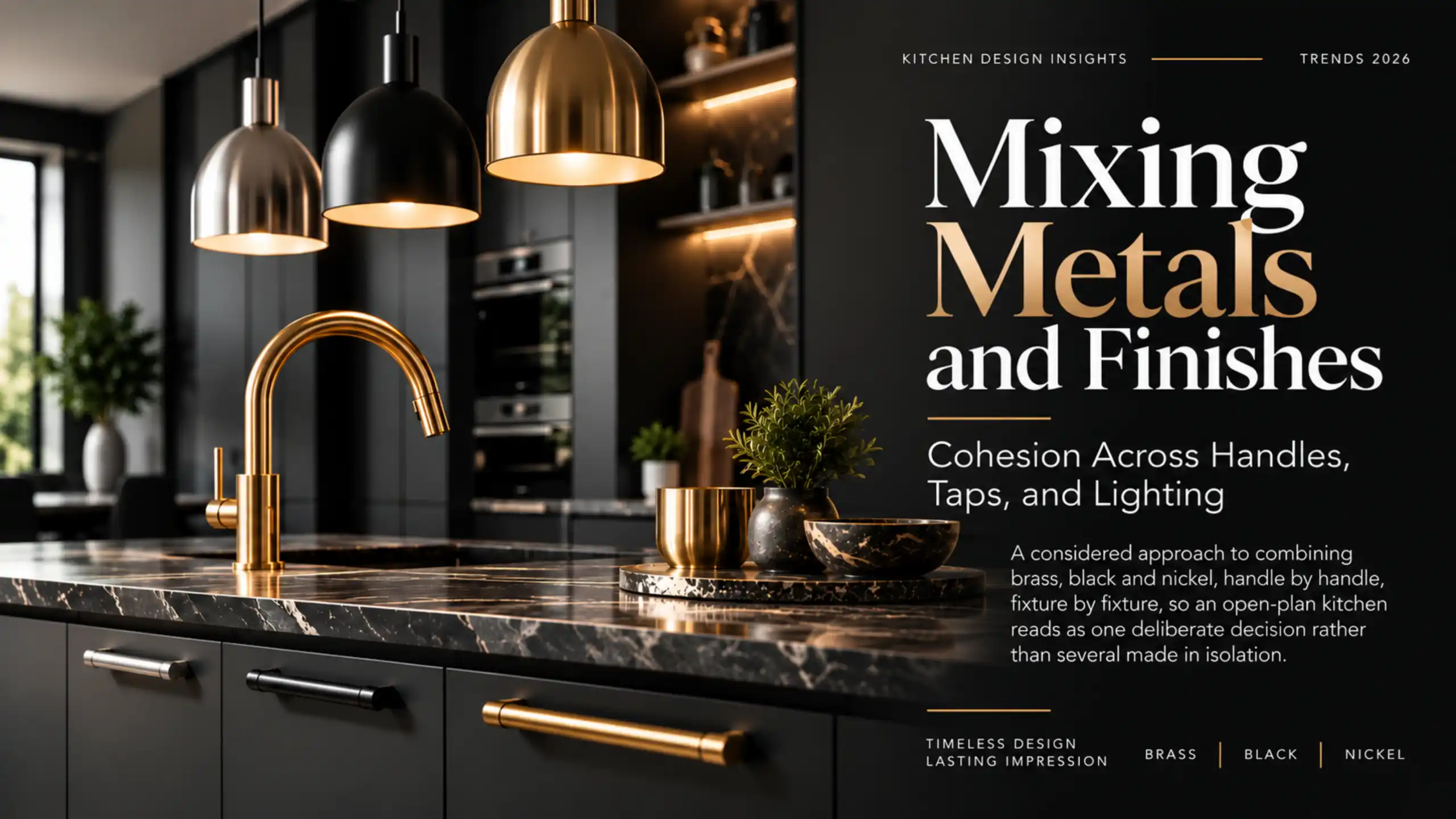
A considered approach to combining brass, black and nickel, handle by handle, fixture by fixture, so an open-plan kitchen reads as one deliberate decision rather than several made in isolation.
Why Mixed Metal Finishes Now Read as Intentional, Not Accidental
Mixing metal finishes in a kitchen used to be treated as a risk best avoided. The safe route was to choose one metal, brass, chrome or black, and repeat it across every handle, tap and light fitting in the room. That caution has faded. A kitchen built around two considered metal finishes, and occasionally three, now reads as more bespoke than a kitchen that plays it safe, provided the mixing follows a method rather than happening by accident.
The shift has been driven partly by design commentary moving away from rigid matching rules and towards layered, collected interiors, and partly by the sheer range of finishes now available across cabinetry hardware, tapware and lighting. Design writers covering the trend describe a dominant-plus-accent approach: one finish carries most of the visual weight, and a second is used with intention in specific zones. That logic, rather than any fixed rule about which two metals belong together, is what separates a kitchen that feels curated from one that feels like several unrelated purchasing decisions stacked on top of each other.
International design commentary has reached a similar conclusion, treating mixed metal kitchens as a lasting way of decorating rather than a passing trend. South African interiors coverage has followed a comparable path, with local design publications identifying layered, tonal hardware choices among the 2026 kitchen trends rather than treating a mixed palette as a fad that will date quickly.
For a bespoke kitchen, this matters more than it might for a smaller renovation. Open-plan South African homes often place the kitchen in direct view of dining and living areas, sometimes for most of the day. Every handle, tap and pendant light is visible at once, which means inconsistency is far more noticeable than it would be in a closed-off, single-purpose room.
Treat Handles, Taps and Lighting as One System, Not Three Decisions
The single most common reason a mixed metal kitchen feels unplanned is that the handles, the tapware and the lighting were specified at different points in the project, often by different people, without reference to each other. Cabinetry hardware gets chosen with the joinery. Tapware gets chosen with the sink. Lighting gets chosen last, sometimes as an afterthought once the ceiling detail is finalised. Each decision may be reasonable on its own and still add up to a room that feels uncoordinated.
Start with a Lead Finish
The more reliable method is to choose a lead finish before any of the three categories are specified individually. This is the metal that will appear most often across the kitchen: on the majority of cabinet handles or profile grips, on the main tap, and on the largest or most visible light fittings. Brushed brass, matte black and brushed nickel are the three finishes doing most of the work in current bespoke kitchens, each suited to a slightly different mood, warm and traditional, graphic and contemporary, or soft and understated.
Layer in a Single Accent with Intention
Once the lead finish is set, a second finish can be introduced as a genuine accent rather than an equal partner. This usually works best when it is confined to a specific zone rather than scattered evenly through the room: a run of pendant lighting over an island in a contrasting tone to the cabinetry hardware, or a scullery tap finished differently to the main kitchen tap because the two spaces are rarely seen together. Confining the accent to a zone, rather than alternating it handle by handle, is what keeps the effect looking deliberate rather than indecisive.
Warm and Cool Pairings That Hold Together
Not every combination of metals reads as coordinated, even when each finish is beautifully made on its own. The pairings that tend to work share an underlying logic: a warm tone is balanced against a cool or neutral one, rather than two competing warm tones, or two competing cool tones, sitting side by side.
Brass and Black
Brushed or lacquered brass paired with matte black is currently one of the most requested combinations in bespoke kitchen briefs, and it holds together because the contrast is deliberate rather than subtle. Black tends to work best on larger, graphic elements, tall unit handles, a statement tap, or a run of pendant lighting, while brass appears in smaller, warmer touches such as cabinet knobs or a kick plate detail. The pairing feels most controlled when one of the two is clearly dominant rather than split evenly across the room.
Nickel and Bronze
For a softer, less graphic contrast, brushed nickel paired with a warm bronze or aged brass reads as quieter and more traditional. This pairing suits kitchens where framed or Shaker-style cabinetry is doing more of the visual work, since the metals recede rather than compete with the joinery detail. Nickel as the lead finish across handles and taps, with bronze reserved for lighting or a feature hood, tends to age well because neither tone is fashion-driven in the way high-contrast brass and black can feel.
Cool metals generally sit more comfortably together than warm and cool paired in equal measure across the same surface. Chrome and brushed nickel, for instance, are close enough in tone that mixing them rarely looks intentional; it tends to read as a mismatch rather than a considered choice, so it is usually better to treat similar cool tones as one finish rather than as a deliberate pairing.
Where Restraint Matters Most in an Open-Plan Kitchen
The zones with the greatest visual exposure deserve the most restraint. An island facing directly into a living or dining area is seen constantly, often from a distance, which means small inconsistencies in finish are easier to notice than they would be at close range. This is generally where the lead finish should be most consistent, on the island’s own handles or profile detail, and where an accent metal, if used at all, should be limited to one clearly defined element such as a single pendant run.
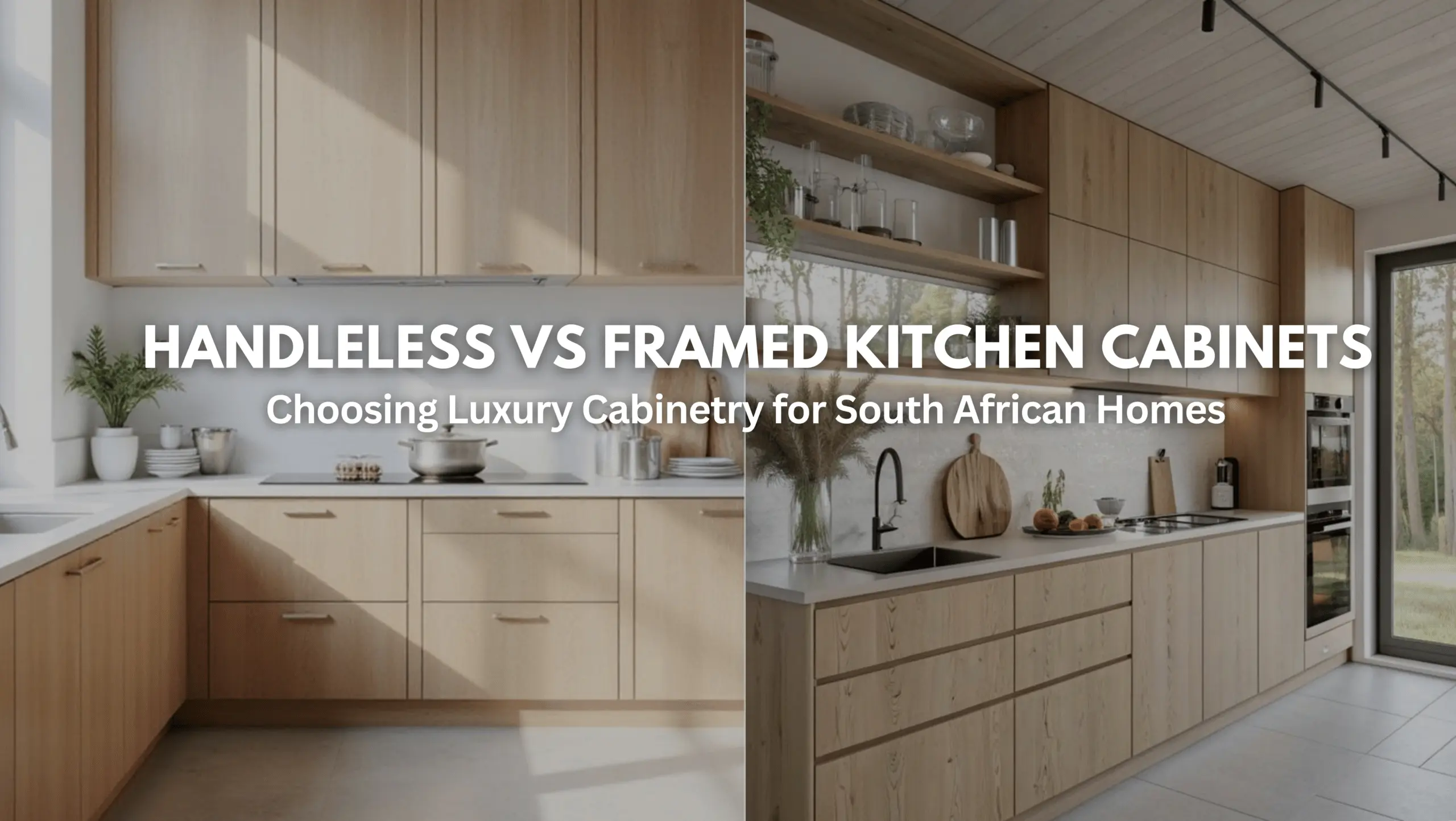
Back-of-house zones behave differently. A scullery or working pantry, tucked away from the main entertaining space, can carry a slightly different specification without disrupting the coherence of the show kitchen, since the two areas are rarely viewed together. The same logic applies to the choice between handleless and framed cabinetry: where a kitchen mixes handleless base cabinetry with framed tall units or a feature wall, the metal finish should generally follow the cabinetry style rather than fight it, with a cooler, more architectural finish on handleless runs and a warmer tone reserved for framed or furniture-like pieces.
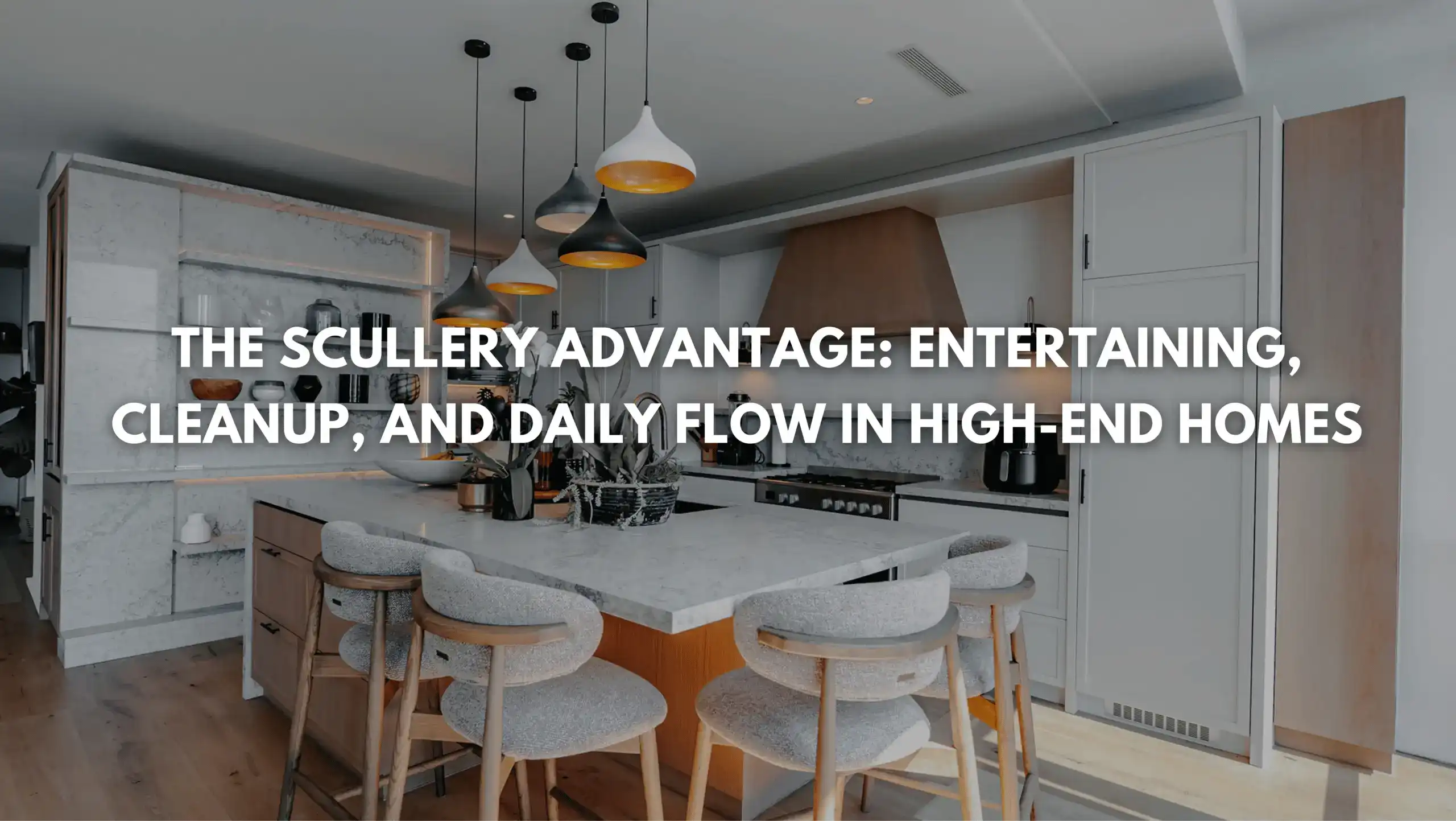
Lighting deserves particular attention in open-plan settings because it is visible from every angle and at every time of day. A pendant finish that clashes with the cabinetry hardware is far more obvious after dark, when the fitting itself becomes the focal point rather than a background detail. Coordinating the finish of pendant lighting with the kitchen’s lead metal, even where the fitting’s shape or scale differs, keeps the room feeling connected rather than assembled from separate showroom visits.
A Regional Note on Finish Durability and Patina
Climate is a legitimate factor in choosing between a sealed, lacquered finish and one that is designed to age and patina naturally over time. In coastal areas such as the Garden Route and parts of the Cape Winelands, humid, salty air accelerates oxidation on unsealed or living metal finishes.
Humidity accelerates brass patina, causing living brass to darken and develop patina faster in humid coastal conditions than it would inland. For homes in these areas, a lacquered brass, matte black or brushed stainless finish tends to hold its appearance more predictably over the years, without the maintenance that an unsealed living finish requires near the coast.
Gauteng’s drier, inland climate is considerably gentler on unsealed finishes, which gives homeowners there more latitude to choose a living brass and allow it to develop a natural patina over time, something many now consider a desirable, characterful outcome rather than a fault to be avoided. This is a genuine regional consideration worth raising early in a bespoke design brief, alongside the wider hardware specification, rather than a rule that should dictate the finish on its own.
Common Mistakes to Avoid
The most frequent misstep is simply using too many finishes rather than too few. Two well-chosen metals, one dominant and one accent, will almost always look more considered than three or four competing tones spread evenly through the kitchen. A closely related mistake is mismatched undertones within what looks like a single finish family: not every brass is the same brass, and not every black hardware finish carries the same depth or sheen, so pairing pieces from different ranges without checking them side by side can introduce inconsistency that only becomes obvious once everything is installed.
Uneven sheen is another common issue. A high-polish finish sitting next to a brushed or matte version of the same metal rarely reads as intentional, even when the underlying colour is correct, because the eye picks up on the difference in reflectivity before it registers the tone. Keeping sheen level consistent within a lead finish, and reserving contrast for the accent metal rather than the finish quality itself, avoids this. Treating handles, taps and lighting as three separate purchasing moments, rather than specifying them together against a single reference palette, remains the single biggest cause of a mixed metal kitchen feeling unplanned rather than designed.
Frequently Asked Questions
How many metal finishes should a kitchen have?
Two is generally the safest number for a considered, professional result: one lead finish carrying most of the visual weight, and one accent used with intention in a specific zone. A third finish can work in a larger kitchen with distinct zones, such as a separate scullery, but it needs a clear reason to be there rather than simply reflecting what was available when each fixture was bought.
Can brass and black hardware be mixed in the same kitchen?
Yes, and it is currently one of the most requested pairings in bespoke kitchen design. It works best when one finish is clearly dominant, typically black across the larger or more graphic elements and brass reserved for smaller, warmer touches, rather than the two being split evenly across the room.
Does brass tarnish in a humid climate?
Living, unsealed brass will develop a patina more quickly in humid, salt-laden coastal air than it would inland, which some homeowners welcome as a natural ageing process and others prefer to avoid. A lacquered brass finish is sealed against this process and holds a more consistent appearance over time, making it a sensible choice for coastal Garden Route and Cape Winelands homes where a predictable, low-maintenance finish is the priority.
Should tapware and cabinet handles match exactly?
Not necessarily. They should belong to the same coordinated palette, generally sharing a lead finish, but an exact match down to the last fixture is not required and can occasionally look overly literal. What matters more is that any variation between them follows the dominant-plus-accent logic rather than appearing arbitrary.
Designing the System, Not the Fixture
A bespoke kitchen is specified as a complete system, from the cabinetry construction through to the smallest hardware detail, which is exactly why mixed metal finishes work best when they are planned at the same stage as the joinery itself rather than added once the design is otherwise finished. Universal Kitchens designs handles, tapware and lighting finishes together from the earliest concept stage, working with Hettich hardware ranges among other approved suppliers to ensure the finish, the mechanism and the long-term performance are considered as one decision rather than several. The result is a kitchen where the metals feel chosen, not collected, and where that sense of intention carries through every handle, tap and light fitting in the room. To see how hardware, tapware and lighting are specified together from the first concept, explore the Universal Kitchens design process.